

Sports betting can drain your bankroll fast if you don't follow safe practices. Many bettors lose money because they skip bankroll management, chase losses emotionally, or place risky parlay bets without understanding the odds. This guide walks you through proven strategies to protect your funds, improve your decision making, and bet smarter. You'll learn how to set budgets, track your bets, avoid dangerous behaviors, and set realistic expectations so you can enjoy sports betting without financial harm.
Table of Contents
- Key Takeaways
- Managing your bankroll effectively
- Research and bet tracking to improve your odds
- Avoiding risky betting behaviors and understanding legal risks
- Setting realistic expectations and using sportsbook tools
- Explore Betynex tools to enhance your safe betting
- FAQ
Key Takeaways
| Point | Details |
|---|---|
| Bankroll management priority | Treat betting like an investment by setting aside disposable income and using a disciplined staking plan to weather losing streaks. |
| Flat staking preferred | Stick to flat betting at 1 to 2 percent of bankroll per bet to limit losses. |
| Stop loss rule | Set a rule to pause betting after losing 10 percent of your bankroll in a day or week to prevent emotional decisions. |
| Research and tracking | Create a simple tracking system for every bet and review results after 50 to 100 bets to identify profitable patterns. |
Managing your bankroll effectively
Bankroll management is the single most important practice for long-term betting survival. Without a clear budget and staking plan, even skilled bettors go broke during inevitable losing streaks. You need to treat sports betting like an investment, not a lottery ticket.
Start by setting aside only disposable income for betting. This means money you can afford to lose without affecting your rent, bills, or savings. Never bet with funds you need for essentials. Once you establish your bankroll, decide on a staking method. The safest approach is flat or percentage staking of 1-2% per bet, which helps you survive long losing streaks with significant bankroll intact and reduces annual losses. If you have a $1,000 bankroll, each bet should be $10 to $20 maximum.
This conservative approach protects you during downswings. Even if you hit a brutal 20-bet losing streak, you'll only lose 20-40% of your bankroll, leaving plenty of capital to recover. Bettors who wager 10% or more per bet often go bust after just 5-10 consecutive losses. Discipline in staking reduces losses by up to 80% annually compared to reckless betting patterns.
Two common staking methods exist: flat betting and the Kelly criterion. Flat betting means wagering the same amount every time, which is simple and safe for beginners. The Kelly criterion adjusts bet size based on your perceived edge and bankroll, but it requires accurate win probability estimates. Most recreational bettors should stick with flat betting because overestimating your edge with Kelly can lead to oversized bets and faster bankroll depletion.
Pro Tip: Set a stop-loss rule where you pause betting after losing 10% of your bankroll in a single day or week. This cooling-off period prevents emotional decisions and gives you time to review what went wrong. For practical guidance on bankroll management tips, explore structured approaches that match your risk tolerance and betting frequency.
Research and bet tracking to improve your odds
Thorough research before placing bets separates winning bettors from losers. You can't rely on gut feelings or team loyalty if you want consistent results. Every bet should be informed by data, trends, and situational factors that influence game outcomes.
Key research factors include player injuries, weather conditions, team form, head-to-head records, and motivational elements like playoff implications. For example, a star quarterback's injury can shift NFL point spreads by 3-7 points. Weather impacts outdoor sports significantly, with heavy rain or wind reducing scoring in football and baseball. Researching these variables and tracking your bets consistently can improve win rates by 5-15% over six months.
Create a simple tracking system to record every bet you place. Include the date, sport, teams, bet type, odds, stake, result, and profit or loss. Spreadsheets work well, but you can also use methods for recording wagers through dedicated platforms that automate tracking. The goal is to build a database that reveals patterns in your betting behavior.

After 50-100 bets, analyze your data. Which sports or bet types yield the best returns? Do you perform better on favorites or underdogs? Are certain leagues more profitable than others? This self-assessment helps you double down on strengths and avoid weak spots. Many bettors discover they're profitable in NBA totals but lose money on NFL spreads, allowing them to focus their bankroll more strategically.
| Research factor | Impact on bet quality |
|---|---|
| Player injuries | High (shifts odds 3-7 points in major sports) |
| Weather conditions | Medium to high (outdoor sports, totals bets) |
| Team form and trends | Medium (recent performance indicates momentum) |
| Head-to-head records | Low to medium (historical context, not predictive alone) |
| Motivational factors | Medium (playoff races, rivalry games) |
Singles bets offer better value than parlays because you only need to win one game, not multiple. A 50% win rate on singles at standard odds keeps you near break-even, while parlays require win rates under 20% to profit, which is extremely difficult. Focus your research on finding high-quality single bets rather than chasing parlay jackpots. For strategies for profitable odds, explore approaches that emphasize value identification and disciplined selection.
Pro Tip: Specialize in one or two sports instead of betting everything. Deep expertise in NBA or Premier League soccer gives you an edge over casual bettors and sportsbooks that spread their focus thin. Specialization improves your research efficiency and win rates.
Avoiding risky betting behaviors and understanding legal risks
Even with solid bankroll management and research, dangerous behaviors can derail your betting success. Emotional decision making, chasing losses, and ignoring psychological risks lead to financial harm and potential addiction.
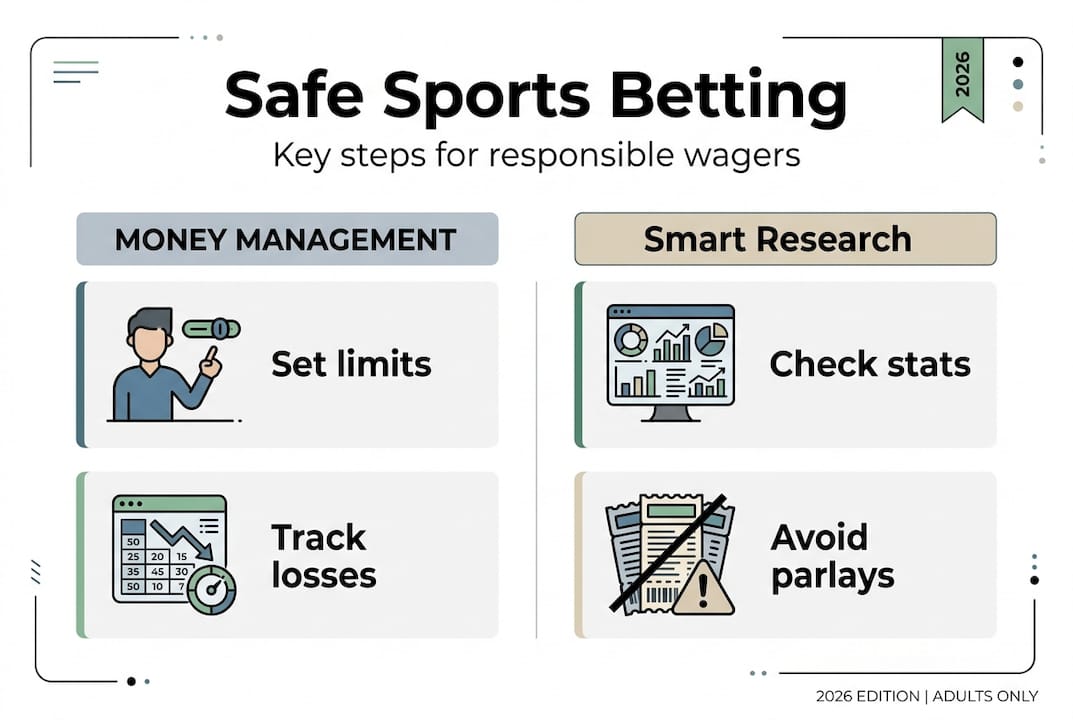
Set strict loss and time limits before you start betting. Decide in advance how much you're willing to lose in a day, week, or month, and stop when you hit that threshold. Time limits prevent marathon betting sessions where fatigue and frustration cloud your judgment. Avoiding chasing losses and setting strict time and loss limits are essential to maintaining control and preferring singles to parlays reduces risk.
Tilt is a poker term that applies to sports betting. It describes the emotional state where you make irrational bets to recover losses quickly. After a bad beat or losing streak, tilt pushes bettors to double their stakes, bet on unfamiliar sports, or place impulsive parlays. Recognize tilt symptoms like anger, frustration, or desperation, and take a break immediately. Walk away for 24 hours to reset emotionally.
Parlays are tempting because of high payouts, but they're mathematically disadvantageous. A two-team parlay at standard odds requires roughly 73% win rate to break even, while singles need only 52.4%. The more legs you add, the worse your expected value becomes. Sportsbooks love parlays because they compound the house edge with each additional selection. Stick to singles where you have realistic break-even thresholds.
Legalization has increased access to sports betting, but it comes with serious risks. Legalization led to a 400% increase in irresponsible gambling, and sports betting frequency is a strong predictor of gambling problems. Young men who bet multiple times per week face the highest addiction risks.
Sportsbooks now offer responsible gambling tools like deposit limits, time-outs, and self-exclusion programs. Use these features proactively. Set deposit limits that match your bankroll plan, and enable reality checks that remind you how long you've been betting. Self-exclusion allows you to block yourself from a sportsbook for months or years if you recognize problem gambling patterns. These tools exist to protect you, so don't ignore them.
Understanding sportsbooks odds helps you identify when bookmakers misprice lines or shade odds toward public favorites. Learning to spot value bets where the true probability exceeds the implied odds gives you a long-term edge.
Setting realistic expectations and using sportsbook tools
Most bettors enter sports betting with unrealistic dreams of getting rich quickly. The reality is far more modest. Even professional bettors grind out small, consistent returns over thousands of bets, and the majority of recreational bettors lose money long-term.
Sportsbooks build a house edge into every market through the vig or juice. Typical house edge in major sportsbooks ranges 4-5%, meaning you pay a commission on every bet. Standard American odds of -110 on both sides of a spread or total imply you must win 52.4% of bets just to break even. This built-in disadvantage makes consistent profitability extremely difficult.
Most bettors lose about 7.5 cents per dollar wagered, and only a small percentage achieve consistent positive ROI. Professional bettors target 2-8% annual returns, not the 50-100% jackpots advertised in marketing. If you can maintain a 55% win rate on standard odds over 1,000 bets, you're performing at an elite level. Anything above 3-5% ROI annually puts you in the top tier of sports bettors.
Variance plays a huge role in short-term results. You can make smart bets and still lose for weeks due to bad luck. It typically takes 500-1,000 bets before your true skill level emerges from statistical noise. This means you need patience and a long-term mindset. Don't judge your betting ability based on a hot or cold week.
| Sportsbook vig level | Impact on bettor returns |
|---|---|
| Low vig (reduced juice) | Break-even win rate ~51%, better long-term value |
| Standard vig (-110) | Break-even win rate ~52.4%, industry average |
| High vig (parlays, props) | Break-even win rate 55-60%+, poor value for bettors |
Some sportsbooks offer reduced juice lines at -105 instead of -110, lowering the break-even threshold to around 51.2%. Over thousands of bets, this small difference significantly impacts your bottom line. Shop for the best odds across multiple sportsbooks to maximize your returns. A bettor who consistently gets -105 instead of -110 gains roughly 1.2% in expected value, which can turn a losing bettor into a break-even one.
Underdog betting and fading the public can yield value because sportsbooks shade lines toward popular favorites to balance action. When 70-80% of bets land on one side, the line often overvalues that team, creating opportunity on the underdog. This contrarian approach requires discipline because you're betting against the crowd, but it exploits market inefficiencies. For deeper analysis on soccer odds accuracy and vig, explore how bookmakers price different markets and where value opportunities emerge.
Pro Tip: Track your closing line value (CLV) to measure bet quality. If you consistently bet lines that move in your favor before game time, you're identifying value even if short-term results are negative. CLV is a stronger predictor of long-term profitability than immediate win-loss records. Understanding how vig and overround influence payouts helps you calculate true probabilities and expected value for every wager.
Explore Betynex tools to enhance your safe betting
You've learned the fundamentals of safe sports betting, from bankroll management to realistic expectations. Now you need tools to put these strategies into practice. Betynex offers resources designed to help bettors make smarter, more informed decisions.
Our platform provides winning bets strategies that identify value opportunities across major sports leagues. You can review past predictions data to analyze trends, track performance, and refine your approach. Whether you're a beginner learning the basics or an experienced bettor optimizing your edge, Betynex delivers user-friendly interfaces and actionable insights.
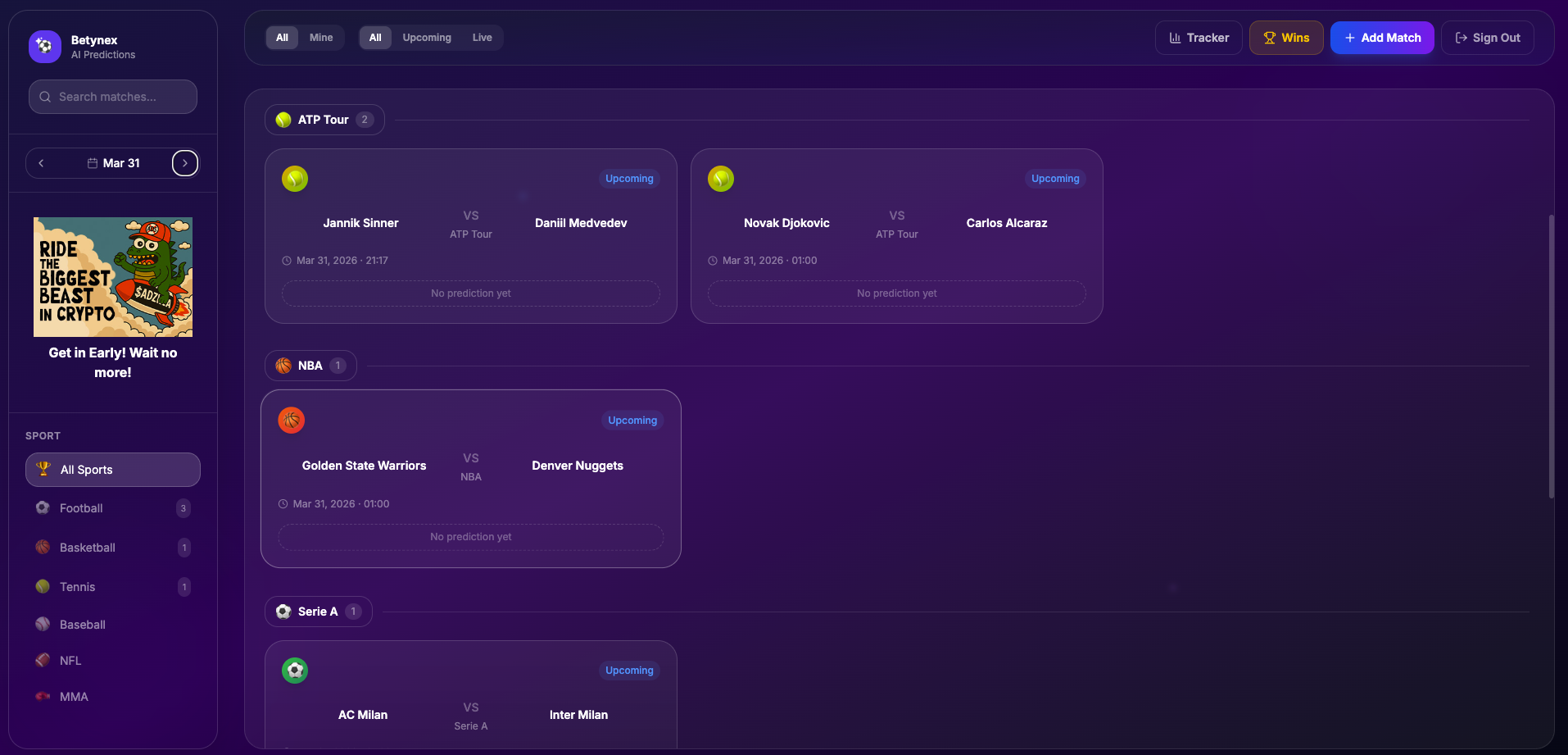
Visit Betynex to explore AI-powered predictions, bankroll tracking tools, and educational resources that support responsible, strategic sports betting. Our platform helps you implement the safe practices covered in this guide, giving you the best chance to enjoy betting without unnecessary risk.
FAQ
What is the safest way to manage my sports betting bankroll?
Use only disposable funds that won't affect your essential expenses. Stake 1-2% of your total bankroll per bet to survive losing streaks and reduce risk. This conservative approach protects your capital and prevents going broke during inevitable downswings.
How can tracking my bets improve my winning percentage?
Tracking clarifies which sports, bet types, and strategies deliver the best results. By recording every wager and analyzing patterns, you identify strengths to exploit and weaknesses to avoid. This data-driven approach can boost win rates by 5-15% over six months.
Why should I avoid parlays in sports betting?
Parlays have extremely low break-even win rates, typically under 20% for multi-leg bets. Singles require only a 45-52% win rate to break even at standard odds, making them far easier to profit from. Sportsbooks compound the house edge with each parlay leg, reducing your expected value.
What impact has legalization had on sports betting risks?
Legalization increased irresponsible gambling rates by 400% as access expanded rapidly. Frequent bettors, especially young men betting multiple times per week, face significantly higher addiction risks. The convenience of mobile betting and constant marketing intensify these dangers.
How do sportsbooks' fees and odds affect my betting outcomes?
The house edge usually sits at 4-5%, which lowers your net returns by requiring a 52-54% win rate just to break even. Lower vig sportsbooks at -105 instead of -110 offer better value, reducing the break-even threshold to around 51%. Shopping for the best odds across multiple books significantly improves long-term profitability.